




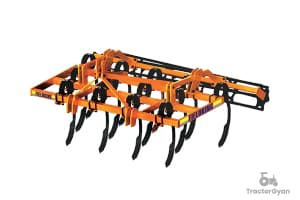

Cultivator Implements
 Cultivators are essential farming tools that help to lower soil erosion, increase moisture retention, promote soil aeration, and provide perfect conditions for seed germination by effectively breaking soil clods. The price of tractor cultivators starts from Rs. 25,000* and goes up to Rs. 1,70,000*. These implements are compatible with tractors ranging from 15 HP to 120 HP. To fit diverse soil and crop requirements, they come in spring, rigid, tractor-mounted, disc cultivator and duck-foot types. Cultivators not only increase output but also cut the general time and effort required in land preparation.























Popular Implements
10.7 litres
6 Forward 2 Reverse, 4 Tilling

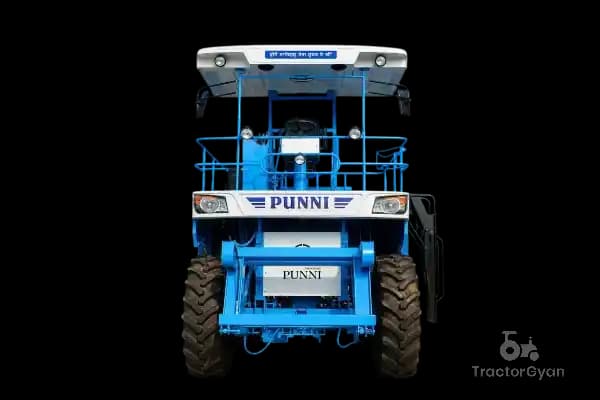
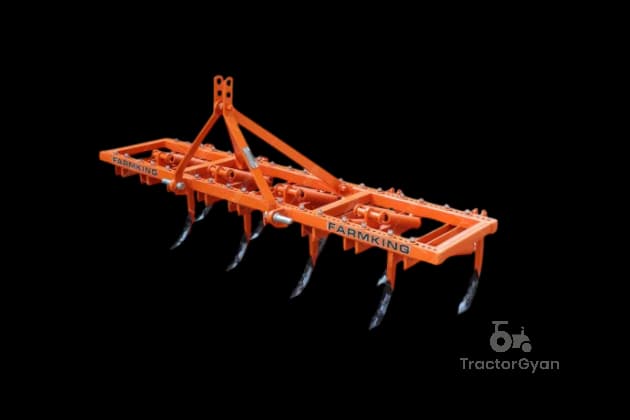

Inquire About Cultivator Implement Price


Implement By Category
Cultivator Implement News & Updates

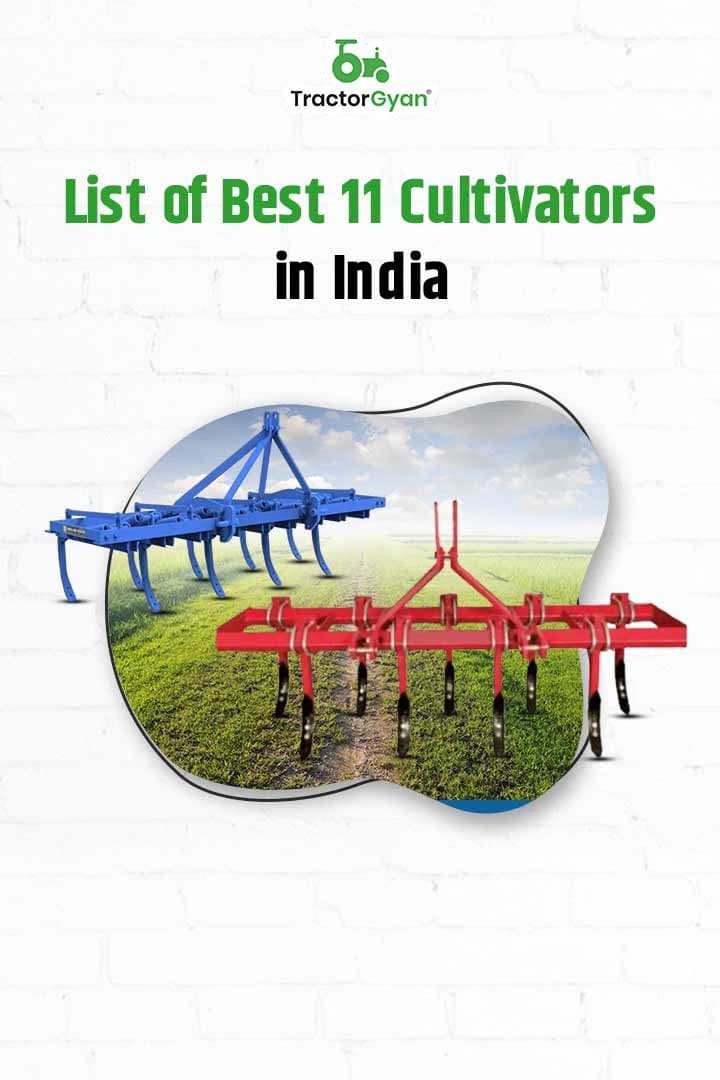
Best 5 Cultivators for 40-50 HP Tractors
Picking the right cultivator can make or break your soil preparation. If you're running a 40–50 HP tractor, here are the top 5 cultivators worth your money this season. How…





Updates About Cultivator Implement
Frequently Asked Questions About Implements Cultivator
Yes. A cultivator works primarily in the topsoil (10-20 cm) using tynes for secondary tillage and weed control. A harrow uses discs to cut, break, and mix soil, it is more aggressive and typically used for primary or intermediate tillage after ploughing
A tractor-mounted cultivator attaches to the tractor's three-point linkage and is powered by forward motion, not PTO. It is the most common cultivator type in India, simple to maintain, cost-effective, and suitable for a wide range of soil and crop conditions.
Operating cost of a cultivator is approximately ₹500-₹900 per acre including fuel and labour, which is significantly cheaper than manual weeding (₹1,500-₹3,000/acre). Mechanized cultivation saves 60-70% on weeding costs for large farms
Standard cultivators work at 10-20 cm depth. Spring tyne models can be adjusted from 8 to 25 cm. Always set the depth according to crop stage, shallow for inter-cultivation near plant roots, deeper for pre-sowing secondary tillage.
Yes. Cultivators are extensively used in cotton, soybean, and chickpea farming for inter-row weed control and soil aeration. In Maharashtra and MP, cultivator inter-cultivation is standard practice 2-3 times per crop season
A rotavator uses PTO-powered rotating blades to thoroughly till and pulverize soil, used for seedbed preparation. A cultivator uses ground-driven tynes for light soil loosening and weed control, used for inter-cultivation and secondary tillage.
Yes. Cultivators are covered under SMAM and various state farm mechanization schemes. Eligible farmers (especially SC/ST and women farmers) can receive subsidies of 40-50%. Apply through the state agriculture department's online portal or your nearest KVK.
Key maintenance steps: clean soil and crop debris after each use, lubricate all joints and pivot points weekly, inspect tynes for bends or wear, check and tighten all bolts before each season, and store under shade to prevent rust.
Lemken cultivators are precision-engineered for high-speed, deep cultivation with minimal power requirement. The Lemken Achat 70 (9-tyne model) suits 50+ HP tractors. While priced higher than domestic brands, Lemken offers longer wear life and superior field performance for commercial farming.
Tractor Gyan at tractorgyan.com/tractor-implements-in-india/cultivator lists 70+ spring, rigid, disc, and duck-foot cultivator models with HP compatibility, tyne count, brand, and 2026 prices, all in one place.
Tractor cultivator prices in India start from ₹25,000 and go up to ₹1,70,000 depending on type, tyne count, and brand. TractorGyan lists 70+ cultivator models with complete specs and updated 2026 prices
A cultivator is used for inter-cultivation (weeding between crop rows), secondary tillage, soil aeration, moisture conservation, and seedbed preparation. It loosens the topsoil without inverting it, promoting better root development and water absorption.
Spring tyne cultivators have flexible spring-loaded tynes that absorb shocks from stones and hard soil, ideal for rocky or uneven fields. Rigid tyne cultivators have fixed tynes that apply constant pressure, best for uniform, stone-free fields needing aggressive soil loosening.
Cultivators are compatible with tractors from 15 HP to 120 HP. A 5-7 tyne cultivator suits 25-40 HP tractors. A 9-11 tyne heavy-duty cultivator like the Lemken Achat requires 50-75 HP for optimal performance.
For wheat farming, a 9 or 11 tyne spring-loaded cultivator is ideal for pre-sowing seedbed preparation. The John Deere Heavy Duty Spring Type Cultivator (₹32,000) and Swaraj Spring Loaded Cultivator (₹25,200) are popular choices in wheat-growing states






















Overview of Cultivators in India
Cultivators are among the most widely used tractor implements in India, designed to prepare the soil for sowing by loosening, aerating, and removing weeds. Available in various types and sizes, cultivators help improve soil structure, save time, and reduce labour costs.
What is a Cultivator?
Cultivator is a secondary tillage equipment. It is used after primary tillage (ploughing) and after sowing of the crop. Its main function is inter-row weeding, loosening the soil and incorporating fertiliser without disturbing the standing crop.
How Does a Cultivator Work?
- The tractor moves in the space between standing crops in the row; spacing needs to match crop row width.
- Tines penetrate the top 8-15cm of soil, enough to cut weed roots but not crop roots.
- Tine tips cut weeds horizontally at the root level.
- Soil tilting and breaking up loosens soil and increases aeration and water infiltration after heavy rain.
- Fertiliser attachment (optional) applies urea or DAP to loosened soil in the same pass.
Cultivator vs Rotavator - Key Difference
Here's a clear comparison between cultivator vs rotavator:
| Parameter | Cultivator | Rotavator |
|---|---|---|
| When Used | After sowing, between standing crops | Before sowing, open the field only |
| Purpose | Weed control + soil loosening | Seedbed preparation + soil mixing |
| Working Depth | 8-15 cm | 10-20 cm |
| HP Required | Lower: 25 to 55 HP | Higher: 35 to 75 HP |
Key Technical Specifications
- Working Depth: 8-20 cm, adjustable via top link and depth wheels.
- Number of Tines: 5, 7, 9, 11, or 13 tines; more tines = wider coverage per pass.
- Working Width: Total coverage width per pass, must be narrower than crop row-to-row spacing.
- Tine Type: Spring tine (flexible, for hard or stony soil), Rigid tine (fixed, for soft prepared soil), Duck-Foot (wide undercutting), and Sweep (stubble fields).
Which Crops Need Cultivator Operations?
| Crop Group | Cultivator Use |
|---|---|
| Cotton, Sugarcane | Inter-row cultivation, earthing up, and soil aeration |
| Maize, Soybean, Sunflower | Weed control and fertiliser application |
| Groundnut | Soil loosening for better pod development |
| Vegetables | Bed preparation, soil loosening, and weed control |
| Orchards | Under-tree soil aeration and weed management |
Cultivator Price in India 2026
Tractor cultivator prices in India lie between ₹25,000* and ₹1,70,000*. It depends on type, tyne count, and brand.
Cultivator Price List Based on Tines Count
| Tine Count | Approx. Price Range (₹) |
|---|---|
| 7-13 Tines | 28,000-65,000 |
| 9-13 Tines | 35,000-75,000 |
| 7-15 Tines | 30,000-80,000 |
| 9-13 Tines | 32,000-70,000 |
| 5-11 Tines | 22,000-55,000 |
Spring Tine Cultivator Price vs Rigid Tine Cultivator Price
| Parameter | Spring Tine | Rigid Tine |
|---|---|---|
| Starting Price | ₹15,000 | ₹13,000 |
| Durability | Good (spring may fatigue over time) | Excellent - fewer moving parts |
| Maintenance Cost | Higher | Lower |
7-Tine vs 9-Tine vs 11-Tine Cultivator - Price Difference
| Tine Count | Coverage Width | HP Needed | Approx. Price |
|---|---|---|---|
| 7-Tine | 1.8-2.2 m | 35-45 HP | ₹20,000-₹32,000 |
| 9-Tine | 2.2-2.7 m | 45-55 HP | ₹28,000-₹42,000 |
| 11-Tine | 2.7-3.2 m | 50-60 HP | ₹38,000-₹52,000 |
Rotary Cultivator Price - For Fine Seedbed Preparation
Rotary cultivators used for fine seedbed preparation typically cost between ₹70,000 and ₹2,50,000, depending on working width, gearbox quality, and tractor HP compatibility.
Best Cultivator Under ₹30,000
- Swaraj Spring Loaded Cultivator
- Khedut Rigid Cultivator
- Fieldking Tyne Ridger Cultivator
Best 3 Cultivators in India 2026
| Model | Tines | HP Required |
|---|---|---|
| Mahindra Rigid Cultivator | 9 Tines | 30-45 HP |
| Landforce Spring Cultivator | 7-9 Tines | 35-60 HP |
| Farmking Extra Heavy Duty Cultivator | 9-15 Tines | 40-80 HP |
Types of Cultivators - Tine & Crop Guide
Spring Tine Cultivator - For Hard, Cloddy Soil
- Self-cleaning from soil and weeds
- Spring absorbs shock in stony/hard soils
- Spring bends when they hit stones, hence no breakage.
Rigid Tine Cultivator - For Soft Prepared Soil
- No-flex tines penetrate consistently and directly
- Best for soft, well-prepared loamy or sandy soils
- Less expensive and lower maintenance than spring-type
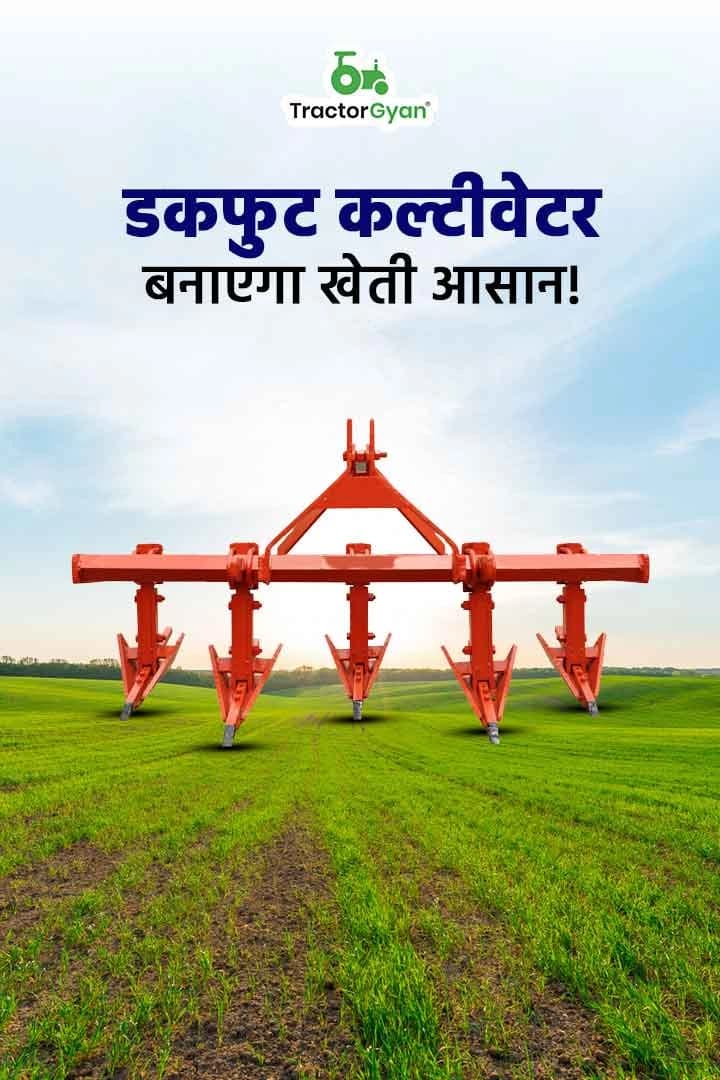
Duck-Foot Cultivator - For Wide Undercutting & Weed Control
- Excellent moisture retention - cuts without disturbing the topsoil
- Wide, flat duck-foot sweeps on rigid or spring shanks
- Undercuts weeds 20-30 cm per tine
Sweep Cultivator - For Stubble Fields
- Narrow sweep points for working heavy crop residue
- Best for fields with wheat or soybean stubble
Rotary Cultivator - For Fine Seedbed, Vegetable Beds
- More costly than tine cultivators
- PTO powered rotary blades
- Ideal for precision sowing
Cultivator with Fertiliser Attachment - Save a Pass
- One pass soil loosening and fertiliser dosing
- Fertiliser drops directly into the furrow opened by the tine
How Many Tines for My Tractor HP?
- 25-35 HP: 5-7 Tines
- 35-45 HP: 7-9 Tines
- 45-55 HP: 9-11 Tines
- 55+ HP: 11-13 Tines
Cultivator Buying Guide - Crop & Soil Specific
Best Cultivator for Cotton Inter-row Weeding
5-tine or 7-tine spring cultivator with narrow tine spacing. Combine with a fertiliser attachment for top dressing urea in a single pass
Best Cultivator for Sugarcane Earthing-Up
A rigid tine or duck-foot cultivator with 5 to 7 tines is best for sugarcane. Reversible duck-foot tips are useful for earthing up sugarcane by pushing soil towards the base of the plant.
Best Cultivator for Wheat & Paddy Stubble Fields
Choose a sweep cultivator or heavy-duty spring tine. It is used for breaking up stubble into the soil before sowing the next crop after the combine harvest.
How to Set Tine Spacing to Match Crop Row Spacing?
- Measure your crop's row-to-row spacing.
- Set cultivator's outer tines to match, so that tines run exactly in the inter-row space.
- Tine tips should be at least 10-15 cm away from each crop row centre.
- Do a slow first pass and check; the tine track should not come within 8 cm of the plant stem.
- Most good cultivators have slotted tine brackets, adjustable every 5 cm.
When is the Right Time to Cultivate? (Soil Moisture Tips)
- Cultivate after 3-5 days after irrigation or rain (when the topsoil is brittle).
- Cultivate when weeds are small (5-8 cm tall), easier to uproot.
- Soil should be slightly moist; not wet, not dry.
- Too wet: Tines smudge the soil instead of cutting; clods form after drying.
- Too dry: Tines struggle to penetrate hard soils; higher HP and more fuel are needed.
Cultivator + Fertiliser Dosing Attachment - Worth It?
A cultivator with a fertiliser dosing attachment can till and apply fertiliser in one pass, saving time, fuel and labour. It is especially useful for medium and large farms that want to improve nutrient placement and reduce operational costs.
Second-Hand Cultivator Buying Guide
- Check the tine tip or shoe condition. Worn or blunt tips miss weeds and don't penetrate properly.
- Check the 3-point hitch brackets for cracks, weld repairs, or bent pins. Poor brackets cause side drift during operation.
- Lay the frame on flat ground and look from both ends; any twist or bend means uneven working depth across tines.
- Pull each spring tine back manually; a healthy spring snaps back firmly. A loose or broken spring needs immediate replacement.
Cultivator Maintenance - Tine Sharpening & Replacement
- Clean all soil from tines and frames when not in use. Apply oil or anti-rust spray on bare metal and store the cultivator in the shade.
- Sharpen tine tips after every 8-10 hours of use in hard soil; blunt tips increase fuel use and leave weeds intact.
- Grease all pivot points and linkage pins every 6-8 hours. It prevents rust outbreaks in the monsoon season.
- Check spring tension after every use in stony soil; fatigue cracks develop at the spring coil top.
- Replace worn tine shoes/tips proactively.